

The Real Customer Retention Strategy Nike Used to Generate Millions
Everyone in marketing is having the same conversation right now about customer loyalty right now, with varying levels of panic.
Customer loyalty is dead! Churn rates through the roof! Customers hopping between brands with the casual indifference of someone swiping through dating apps!
Executives everywhere are wringing their hands about loyalty programs that don’t work, and the endless pursuit of that mythical “sticky” feature that will finally make customers stay.
The thing is, I’m also sitting in conversations with those very customers and hearing the other ends of those conversations.
I’m hearing about hilariously disappointing Black Friday Swag Bags, paltry annual sale offerings, and subscriptions that are always getting both more expensive and worse.
It just doesn’t seem all that complicated to me.
The question isn’t “How do we make customers loyal?” It’s “What would a customer want to be loyal to?” And we’ve been getting the answer to that question very wrong.
Building customer loyalty isn’t about better rewards programs or more aggressive retention emails. It’s about understanding what makes customers actually want to stay—and most brands are looking in completely the wrong places.
In my two decades at Nike, adidas, Micron, and Providence, customer loyalty was something of a superpower for me.
My teams got to launch some absolutely incredible programs that generated millions in revenue. And yes, they were cool, creative, and led by some pretty famous people. But as we all know, none of these are a guarantee that customers will stay.
What made these projects bring in the hundreds of millions in ARR was not flash, features, or even the product itself. What made them different was that people actually wanted to show up.
When you make people feel like they’re part of something bigger than a transaction, loyalty becomes an inevitability.
Let me show you what I mean.
Customer Retention Through Community, Not Features
In 2012, when I was helping shape Nike’s digital community strategy, the running app market was already crowded. Runkeeper, MapMyRun, Strava – everyone had GPS tracking, pace calculations, distance logs. Features weren’t the differentiator anymore.
Luckily, runners don’t just want features. They don’t just want data, either. They want someone to run with.
Nike+ Running (which became Nike Run Club in 2016) worked because we built something most brands wouldn’t dare: a system where the digital and physical actually reinforced each other.
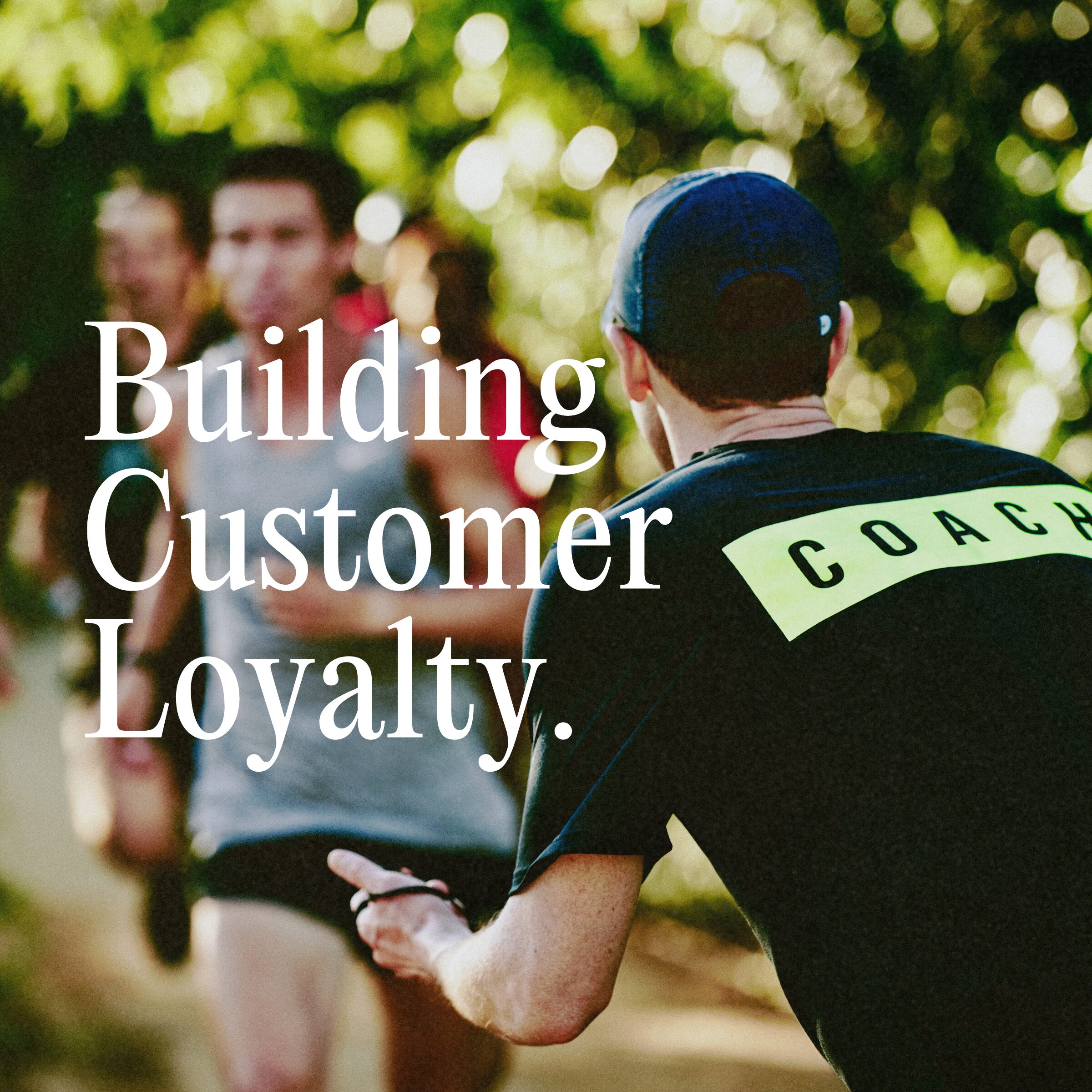
The app wasn’t just tracking your run, it was your membership card to a global community of runners, and more importantly, to weekly meetups at local Nike stores where you’d actually run alongside real people.
It sounds obvious now. At the time, it was radical.
Here’s how the flywheel worked:
You’d download the app, track your first run, see your stats. Fine. But then the app would notify you: “There’s a Nike Run Club meeting Tuesday at 6 PM, two miles from you.” You’d show up – maybe nervous, maybe skeptical – and find yourself running with 30 other people at your pace, led by a trained Nike coach, all of you tracking the run together on the same app.
Suddenly, the app wasn’t just software. It was your connection to this community. Your run data became social currency. You’d see your friends on the leaderboard, join group challenges and earn badges that your running crew could see.
And the physical runs were app recruitment engines. New runners who’d never heard of Nike+ would show up at a Tuesday run, get introduced to the app by the coach or another runner, download it on the spot, and become part of the digital ecosystem.
Digital drove physical. Physical drove digital. And in the middle were runners who felt like they belonged to something.
By 2014, New York City alone had over 3,000 active participants in Nike Run Club programming. Not customers. Not users. Participants. People who identified as “Nike runners.”
That’s the difference between loyalty and identity.
When a Comedian Became Our Best Marketing Strategy
Then we did something most brands would never approve: we let a comedian become the face of our running community.
In 2015, Kevin Hart posted on Twitter: “Who’s running a 5K with me – right now?” It was spontaneous, authentic, very Kevin. And we saw an opportunity most brands would’ve missed.
The traditional playbook would’ve been: put Kevin in a commercial, pay him to wear our gear, slap his face on a billboard, call it sponsorship. Done.
But we understood something here about what Kevin was doing: Kevin’s value wasn’t his fame, but his relatability. Here was a guy who traveled constantly, struggled to maintain discipline, made jokes about his own fitness journey, and somehow still got his runs in. He wasn’t aspirational in the intimidating way. He was aspirational in the human way, the “if he can do it, maybe I can too” way.
So we built “Run with Hart,” a multi-city tour where Kevin would literally show up and run with everyday people. Twelve cities. Spontaneous announcements. No VIP sections. No barriers between celebrity and community.
In Boston, we partnered with Uber so runners could request Kevin Hart as their personal running pacer directly through the app. (It crashed Uber’s systems within minutes, thousands of requests flooding in simultaneously.)
Kevin ran with every single runner, and waited until the last person had crossed the finish line.
The numbers tell one story: 12,700+ in-person runners in 2015 alone, 4,800+ new Nike+ members from that cohort, 12 million+ social media engagements, 580,000+ live-stream views.
But the real story is what those numbers miss.
We took running – something many people found intimidating, exclusive, or frankly boring – and made it approachable. Kevin’s humor lowered the barriers. His authenticity made it feel like you weren’t joining a brand initiative; you were joining something with a friend who also hated early mornings and cramped up on mile three.
When we live-streamed the Amsterdam run in January 2016 on Kevin’s Facebook page (Nike’s first Facebook Live event), 750 people showed up in person. Over a million watched online within 48 hours. These were people who felt included in something happening in real-time, something they could participate in even from thousands of miles away.
Who doesn’t want to be loyal to something like that?
The Gamification Trap Everyone Falls Into
Of course, we used gamification. Badges for milestones. Leaderboards for competition. Streaks to build habits. Challenges to drive frequency.
But most brands get gamification catastrophically wrong. Points are not the thing that creates loyalty. Community is.
I’ve watched too many product teams treat gamification like a silver bullet. Build a leaderboard, and engagement will skyrocket! Create streaks and you’ll reduce churn! Add badges! Users love badges!
And it works for about six weeks. Then users realize they’re collecting meaningless digital tokens, competing against strangers they don’t care about, maintaining streaks purely out of guilt rather than joy.
The badges worked for Nike Run Club because you earned them alongside your running crew, and they became conversation starters at Tuesday runs. “You got your half-marathon badge? When are you doing your full?” The leaderboards worked because you were competing against friends you’d met in person. We hired photographers to join the runs, so participants ended up with professional-grade photos of themselves. The challenges worked because completing them meant you could say “we did it” not “I did it.”
Research later confirmed what we knew intuitively: runners who attended physical Nike Run Clubs had 30-40% higher retention rates than solo app users, even when both groups had identical access to gamification features.
The difference was the friendships, not the points.
When you form real relationships through a brand’s platform, the switching costs aren’t about contracts or subscription fees. They’re social. Leaving means leaving your people. And people don’t abandon their communities for a competitor’s 20% off promo code.
The Strategic Pivot No One Saw Coming
By 2016, we faced a reckoning. Nike Run Clubs required massive operational investment: coaches, venue partnerships, staffing, and coordination across dozens of cities globally. Some markets thrived. Others struggled. And when we briefly discontinued the weekly NYC runs in 2014, over 3,000 runners revolted loudly enough to create a genuine PR crisis.
We could have doubled down on physical infrastructure, scaling up retail activations proportionally. More coaches, cities and events.
Instead, we asked a different question: What if the app itself became the primary community, with physical runs as amplification rather than foundation?
This question separated effective customer loyalty programs from expensive retention theater.
That’s when Nike+ Running became Nike Run Club. Not just a rebrand, a fundamental repositioning. We were no longer “a running app with community features.” We were “a running community with app features.”
The difference is subtle but critical. It changed how we invested, how we measured success, how we designed new features. The app became the core experience. Physical runs became high-touch moments that strengthened the digital community, not the reverse.
This is the maturation every community-first brand must eventually make: recognizing when your digital platform is strong enough to become the primary container for belonging, while keeping strategic physical touchpoints that reinforce emotional connection.
It allowed us to scale impact without proportional cost increases. A single app update could reach millions of runners globally. A local run event in Tokyo could be live-streamed to inspire runners in São Paulo. We could maintain community identity without maintaining hundreds of retail activations.
And, most telling of all, we had community members reaching out to talk to us. I remember one participant who wrote a furious letter to executive chairman Mark Parker when we changed the format to Nike Run Club. A few months later, he wrote another letter, apologizing. “I just bought my first pair of Nikes,” he wrote.
Now that is what I call some loyalty.
I’ll be blunt: most brands never make this transition because they fundamentally misunderstand what they’ve built. They think they’ve created a loyalty program when they’ve actually created a community. And communities don’t scale the same way transactions do.
Customer Loyalty vs. Customer Identity: The Difference That Drives Revenue
Loyalty implies obligation. Identity implies belonging.
When someone says “I’m a Nike runner,” they’re not describing their purchasing habits or their brand preferences. They’re describing who they are. And people don’t switch identities casually – not for a discount, not for better features, not because a competitor launched a shinier app.
The formula isn’t complicated, but it does require doing things most brands won’t commit to:
Create a reason for people to connect (physically or digitally) around a shared practice or goal.
Not around your product. Around the activity your product enables. We weren’t building a community of people who loved Nike. We were building a community of runners who happened to use Nike.
Reduce barriers to participation ruthlessly.
Make it approachable. Use humor, relatability, human imperfection. Kevin Hart didn’t tell people to “unlock their potential” or “be their best selves.” He joked about cramping up and still finishing the run. That’s what made it real.
Build in social reinforcement that actually matters.
Let people see each other’s progress. Create opportunities for genuine celebration. Make individual achievement feel like collective victory. But (and this is critical) make sure the social elements connect people to each other, not just to your brand.
(Most important) respect the community.
Don’t treat it as a marketing tactic. And for the love of God, don’t try to buy their affection with $3 “swag bags.”
Invest in it. Show up consistently. When we discontinued NYC run clubs in 2014, we learned the hard way that community requires commitment, not campaigns. We’d broken real trust.
Finally, let the community tell your story.
Our best marketing wasn’t the ads or the influencer partnerships or the Super Bowl spots. It was the 13,000 people who ran with Kevin Hart and told their friends about it. The Tuesday night regulars who recruited their coworkers. And the app users who posted their badges on Instagram not because we asked them to, but because they were genuinely proud.
When you make people feel included, they become evangelists automatically. And evangelism scales in ways advertising never will.
The Question Every CMO Should Be Asking
If I’m advising a CMO today, here’s where I’d start: stop asking your team how to increase customer lifetime value. Start asking them what your customers would genuinely miss if you disappeared tomorrow. What would make them riot like those Nike Run Club members in 2014?
If the answer is “our product, because it’s cheaper/faster/better,” you’re at risk. Products get better, faster, and cheaper all the time, and no amount of gamification, loyalty points, or retention emails will fix that.
But if the answer is “the community we facilitated” or “the identity we helped them build” or “the connections they made through us,” then you have something defensible. You have something competitors can’t easily replicate by throwing money at performance marketing.
Customer loyalty hasn’t disappeared. What’s disappeared is customers’ willingness to be loyal to brands that treat them like transaction sources rather than community members.
If your retention strategy depends on discounts, lock-in contracts, or guilt-driven emails about abandoned carts, you’ve already lost. You’re competing on price and convenience, and someone will always undercut you on both.
But if your strategy creates spaces, digital or physical, where people connect with each other around shared identity, where they feel like they belong to something meaningful, where being part of your community becomes part of who they are, you get something way more durable.
And once you’re in, once you’ve found your people, once you identify as part of something bigger than yourself, why would you ever leave?
I got to see the reward of some of the coolest projects in the world, and much of that is because I was never solving for loyalty. I was solving for belonging.
And belonging, it turns out, is the most powerful retention tool there is.
Now, does your brand have the guts to build it?
Frequently Asked Questions
What makes a successful customer loyalty program?
The most effective loyalty programs create community and identity, not just transactional rewards. Customer engagement increases when people feel like they belong to something bigger than a points system or discount structure.
How do you measure customer loyalty?
Look beyond net promoter score (NPS) and traditional metrics. Ask what customers would genuinely miss if you disappeared. Real brand loyalty shows up in behavior—like 3,000 runners rioting when you cancel their Tuesday run—not in survey responses.
Why do most loyalty programs fail?
Most loyalty programs treat customers like data points instead of community members. Loyal customers don’t stay for points or perks—they stay for connection, identity, and the people they’ve met through your platform.
What’s the difference between customer retention and customer loyalty?
Retention is keeping people from leaving. Loyalty is giving them a reason to stay. One is defensive, focused on reducing churn. The other is offensive, focused on building something people identify with. Communities create loyalty. Discounts create retention. Only one is sustainable.
Ready to build a brand people belong to, not just buy from? Goodstory can help. Book a strategy session with Goodstory.


